Cub hunting is the secret side of fox hunting

20th August 2025

Below is how to spot a cub hunt and if you are able sab it.

SLAUGHTER AT DAWN

Cub hunting is the secret side of fox hunting – it is carried out in the heart of the countryside, as early as six in the morning and well away from the eyes of the public. This callous activity is carried out at the beginning of autumn, by all foxhunts, to introduce new ‘puppy’ hounds to killing. Aware of how distasteful the practice must seem, he hunting fraternity now refer to it as ‘autumn hunting’, in an attempt to appear more politically correct.

In a typical cub hunt, riders and foot followers are placed around the edge of a wood, or ‘covert’, where the litters of young foxes dwell – their purpose is to form a human fence, thus trapping the unsuspecting cubs inside, before the hounds enter. Encouraged by the voice of the huntsman, the hounds proceed to scent out their quarry, and for the terrified foxcubs, the environment in which they spent the last four or five months growing up, is suddenly turned into a deathtrap.

With all earths and underground escape routes blocked by terriermen, the invasion of hounds forces the cubs to run in terror. For the hunted cub, the only means of escape is to flee from the wood – but its escape is denied by the shouts and lashing whips of the hunt followers around the perimeter making them easy quarry for the new, inexperienced hounds. All too frequently the cub is mauled continuously for several minutes before death finally releases it from its cruel ordeal.

To the average thinking person the whole concept of using foxcubs as pawns for training young foxhounds to kill, is ruthless and sadistic. Yet the hunting fraternity claim that it is a very necessary part of hunting. with the law still backing such activities, these defenceless creatures have no chance. Except for one: The Hunt Saboteurs Association.

SABBING THE SLAUGHTER

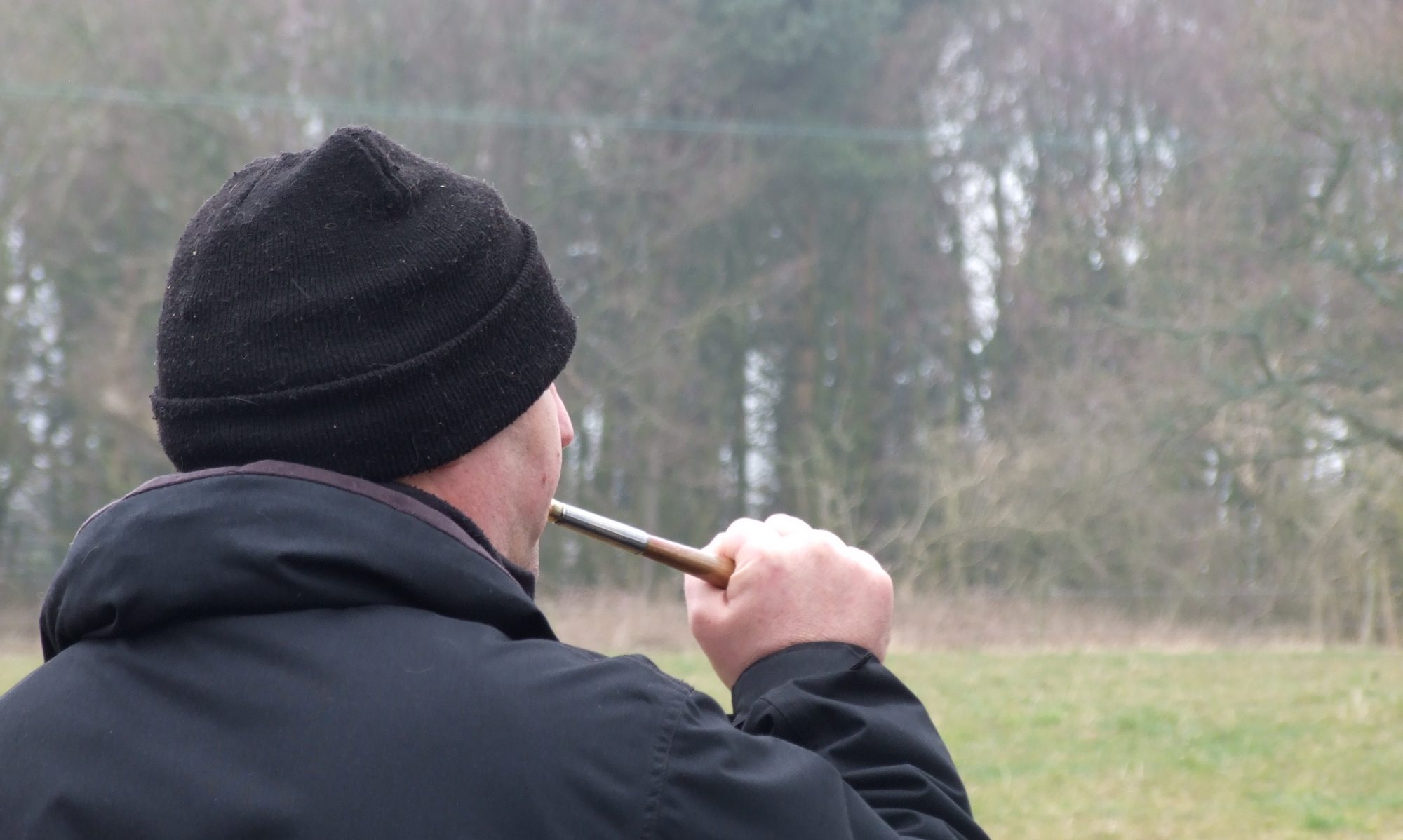
It is important that saboteurs go out whenever the hunts go out. This is the one time with hunts that often all you can do is try and keep the kill rate down to one or two. I’ve seen one hunt kill seven foxes in three hours. Sabs stop the killing by getting the hounds out of the covert or field with the usual tactics of horn blowing and voice calls. The young hounds are the easiest to call out. This breaks down the bond between the huntsman and the hounds. Sabs very often find this a difficult time, because blowing the horn to get the hounds can easily put them onto a fox which cannot escape. So, all they can do is try their best and not get too disheartened. In root crops, it is worse because the fox which is resting in the crop cannot move as fast as the hounds, because it is smaller and cannot run over the crops, so it has to crawl on the ground. It does not help when the huntsman or whipper-in can usually see it and rides over to where the fox is, calling the hounds. If it does manage to get out, then again the riders may push it back into the jaws of the hounds. Sabs have to keep trying to get the hounds by calling with voice and horn even if nothing seems to be happening. They will probably be having an effect by keeping the hounds heads up or putting them off.

Willy Poole in his book: Hunting, An Introductory Book. says about a hunt’s failure to catch a fox: “….noise, bad noise has probably saved more foxes than almost anything else for it distracts hounds, especially young hounds, and breaks their concentration. The only sound they should he hearing is the cry of their elders and betters. Shouting gets hounds heads up when they should be on the ground smelling…” So, with sabs making some noise, they should be having an effect, even if the hounds are not rushing out to their side.

Back to tactics needed for sabbing

############################

Cub hunting and how to sab them

The object of cub hunting is :

a) to train young foxhounds in pack work, to follow the older hounds, obey the horn and calls of the huntsman, to familiarise themselves with the scent of the fox so they don’t riot after other animals and to give them the taste of fox blood.

b) to disperse the fox cubs over a wider area (especially from coverts that can’t be visited in the main season due to their position near roads, railways and other hazardous places) so there will be foxes in most coverts to provide better sport, to persuade cubs that safety lies not in going to ground but in fleeing across country – thus providing good runs.

c) to reduce fox numbers.

Cub hunting takes place in the early morning when scent is at it’s best, before the heat has dried it up. But sometimes the more popular evening meets are held, taking place as the sun begins to lose its strength at the end of the day.

As with the fox hunt the huntsman, hounds and whippers-in are present, but the followers are normally reduced and are invited by the Master to attend. Hounds will go straight from the kennels to the covert and the field will usually wear ordinary hacking gear.

Late July, August and September

On arrival, followers will be positioned round the perimeter in order to keep the cubs (and hounds) in the wood, this is called ‘holding-up’. If a cub is seen exiting it will be frightened back by the mounted followers slapping their saddles with their crops. The idea is to keep both cubs and hounds in the close confines of the wood so that the young hounds will learn to hunt in thick covert where they have to use their noses, and listen and follow the cries of the old hounds. It is not unusual for cubs to be dug out and given to the hounds, thus giving them a taste of fox blood.

October

Runs in the open will be encouraged so that young hounds can learn to hunt on the right line, to see the fox and know what it looks like, therefore earths may be blocked up. It is also time to disperse the cubs. The cubs will be between four and seven months old, having been born between the end of January and the beginning of May. By the time fox hunting starts, they will be almost fully grown and also by this time they will know that the sound of the horn is the signal to leave the covert and run.

Sabbing a Cub Hunt

Most hunts know exactly which woods harbour litters of fox-cubs. Coverts are owned by hunt supporters and are often carefully protected by their owners so that by the time the cub-hunting season starts the hunt has all the information it needs to decide which woods to hunt and of course plenty of young foxes to kill. Since foxes tend to bred in the same coverts from generation to generation you should keep records of which woods are hunted during cubbing and use this information to your advantage in future years. Pre-meet work is vital during cub-hunting.

The most effective means of sabbing a cub hunt is by using pre-spraying methods before the hunt meets – refer to tactics already mentioned for pre-meeting fox hunts. Sabs should bear in mind two problems at this time of year, a) the density of the coverts and b) the time in the morning that cubbing takes place. For pre-beating, rookies can be especially useful as they remain effective during the course of the hunt.

In early season cubbing it is important to try horn blowing and calling to confuse the new and inexperienced hounds, try to compete with the huntsman for control (a pack which riots easily will be difficult for the huntsman to control in the coming season). If the hunt enter a covert that has not been pre-sprayed, it is essential to call them out by horn or voice from different directions.

False trails can also be used and they should be laid so that the false trail comes straight out of the wood. If a few hounds appear to be interested in it they should be encouraged by the sabs to hunt the trail, (doubling the horn is the best tactic to do this). This tactic (trail laying) should be done early in the season when the coverts are being held up and the huntsman is more interesting in teaching his young hounds to kill rather than to hunt a foxes line. Later in the season when the hounds are being trained to hunt a line sabs should stop the chases at the first opportunity.

For late Autumn cubbing adopt tactics as for fox hunting.

It should be noted that there is reduced advertising of meets during the cubbing season, as its function is not necessarily to provide ‘sport’ for subscribers in the short term. The long term functions are :

1) to spread cubs over a wide area during the late autumn cubbing so that there is less chance of blank day,

2) to encourage cubs to run from the coverts rather than go to earth and

3) to teach young hounds to kill.

Some hunts conduct cub hunting in early evening and all hunts when cubbing will hunt more often during the week, anything from three to six days. Sabs waiting in a prominent position outside the kennels have been known to dissuade some hunts from cubbing.

https://www.nwhsa.org.uk/cub_hunting.html

Leave a Reply

Discover more from NORTH WEST HUNT SABOTEURS

Subscribe now to keep reading and get access to the full archive.

Continue reading